
A good friend of ours brought us this weird named wine, created in the Valtellina area of Lombardia. Sforzat is a name used for this red wine, that goes through a process, an extra step, in order to create a really original drink. The grape used here is the nebbiolo, also known as chiavennasca in this area, only that the harvest is later than usual- in the month of october instead of september or late august, and only the best grapes a picked. They are then laid out to dry and shrivel, a process which can take up to 3 months. After 18 months in a barrel and another 12 in the bottle, we can finally try it. The result is similar to that of an Amarone, a wine with a high percentage of alcohol, even though you can't taste it, with a grand structure, an incredible softness and just a touch of sweetness. Our bottle of Sfurzat was made by a vineyard named Rainoldi, who are particularly interesting because their vines are located on a side of a hill which has such a high incline, making harvesting these grapes really d ifficult. In fact they use a sort of train to help the people collect the bunches.
The color is a granate red with touches of burnt orange at the tips. Aromas of tobacco, dried violets and especially that of white truffles fill the glass. A great intesity and persitance, while warming and giving a velvety touch to the inside of our mouths. Pairs nicely with grilled meats like ribs or pork chops, or wild meats and aged cheeses.
Vote 90/100
Un amico molto vicino a noi ci ha portato una bottiglia interessante proveniente da una zona meravigliosa, La Valtellina.
L'Azienda prodruttrice è la Rainoldi situata a Chiuro vicino a Sondrio. Qui si ha ancora un grande rispetto per il lavoro in vigna infatti i vigneti son disposti con una elevata inclinazione e il lavoro è veramente difficoltoso e faticoso. Come potete vedere nell'immagine l'uva durante la vendemmia in alcuni casi è trasportata da un trenino che aiuta i viticultori a portarla in cantina data la grossa difficoltà nei movimenti.
Lo Sfursat la fa da padrone, questo vino con le uve 100% nebbiolo viene lasciato appassire nel fruttaio per almeno 3 mesi asciugando le uve fino al 35%, per concentrare in questo modo il frutto. L'invecchiamento avviene in botti di rovere per un periodo di 18 mesi per essere poi affinato in bottiglia prima della messa in vendita per almeno 12 mesi.
Il colore è di un granato che sfuma sull'aranciato, con dei profumi che ricordano la viola secca e il tabacco dolce con toni di tartufo bianco. In bocca è morbido con una fantastica intensità e persistenza, ben presente la freschezza.
Ottimo con carne alla brace, selvaggina e formaggi stagionati.
Irresistibile
Voto 90/100
Tuesday, June 15, 2010
Sfursat della Valtellina 2003 14,5%

Wednesday, June 9, 2010
Moscato 'Dorato', Travaglino

This wine was definitely a surprise. Normally I'm not a fan of moscato, but this one by Travaglino was excellent. Slightly sparkling and with only 5,5% alcohol, it was light and refreshing, with just the right amount of sugar, so as not to be overbearing. Travaglino, my friends from the Oltrepò Pavese, have many wines, and are most known for their Champagne styled sparklers. This bottle is one of their simpler DOC wines, similar to their young pinot nero and pinot grigio. I really wasnt expecting anything from it. We opened the bottle simply called Dorato, with a few friends over desert and everyone loved, asking where they could buy it! Slight aromas of mint and golden apple, lemon and peach. The light golden colored moscato can be drunk alone or paired with fruity tarts or dry Italian pastries.
Questo vino è una vera sorpresa. In generale non sono un' amante del Moscato, ma questo del prodottore Travaglino era stupendo. Un pochino vivace e con solo 5,5% di alcol, leggero e rinfrescante, con una quantità di zuccheri giusti per non impastare troppo la bocca.
Travaglino, nostri amici del'Oltrepo Pavese, hanno tanti vini e sono sopratutto conosciuti per il loro vino spumante fatto nello stile champanoise. Questa bottiglia di Moscato è una della loro DOC versione base e molto simile ai loro vini giovani di pinot nero e pinot grigio.
In etichetta è stampato il nome Dorato, abbiamo aperto questo vino con amici abbinato con alcuni dolci. A tutti è piaciuto, domandavano dove potevano eventualmente comprarlo.
Sentori di menta, mele golden, limone e pesca. Il moscato, con il colore oro, può essere bevuto da solo o abbinato con le pastine secce o con qualche frutta seccca.
Sunday, May 30, 2010
Krk Island, Croatia

Theres no better to see a city then when you can get to visit it with a friend from that area. This past week, we were invited to Punat, on the island of Krk in Croatia. With its many beautiful islands and the gem city of Dubrovnik, Croatia has really rebounded from the war in the early nineties when it was part of Yugoslavia. The summers bring thousands of tourists and the cool yet crystal clear waters fill with boats and yachts. Besides tourism, fishing and agriculture are the main industry and locals are really proud of what the land and sea produce.
On arrival late friday evening, we went straight to our friends husbands town of  Vrbnik where two beautifully cooked fish we were waiting for us. Freshly caught that morning by our host, the dentice (known as dentex is english) and the orata (gilthead) were slowly baked in a brothy sauce of white wine, bread crumbs, parsley and a touch of cream. Tender but well structure the sweetness of the fish was washed down with a white wine also made by our host. Zlahtina is found really only on the island of krk and known for its hard skin and strong acidity. This bright yellow white can be a bit hard by itself since the acidity and minerality are really intense but paired with food I couldn't believe how good it was.
The next day my friends made a dinner for us which also included wine from the area, although this time cha rdonnay, to be had with the plumpist scampi stewed in a red sauce called 'busara' which is made from fresh tomatoes, parsley, onions, white wine, garlic, salt and pepper. We were so stuffed from the meal that all I could think about was walking around the city, trying to digest the meal while looking at the architecture and the fishing boats. Another dish my friends mother made for us was the goulash. A typical plate arriving from the east, it contains veal stewed for many hours in a brown sauce which is then poured over freshly made pasta in the form of a that similar to a penne pasta.
The weekend was perfect, the warm weather and blue skies definitely adding to our experience, learning a new wine found in the central valley of Krk, trying local foods, all we can say is thanks to our hosts ans that we cant wait to visit again!
Non c'e' ninte di meglio di soggiornare in una citta' con qualcuno che ci vive o che e' originario da quell'area. La scorsa settimana siamo stati invitati a Punat sull'isola di Krk in C roazia. Con le sue bellissime isole e le sue interessanti citta' come Dubronovik, la Croazia e' sicuramente rinata dalla guerra degli anni novanta quando faceva ancora parte della Jugoslavia. D'estate ci sono migliaia di turisti e la fresca e cristallina acqua del mare e' piena di barche e yachts. A parte il turismo, la pesca e l'agricultura sono le maggiori fonti e i Croati sono veramente orgogliosi dei loro prodotti di mare e di terra. Arrivati venerdi sera ci siamo diretti immediatamente a casa di amici di Sascia nella città di Vrbnik dove due bei pesci, un'orata e un dentice al forno ci aspettavano in tavola. Pescati al mattino profumavano di buono, teneri e dolci si sposavano bene con il vino bianco il cui produttore eravamo ospiti. Zlathina e' il nome di questo vino famoso per la durezza della buccia e per la sua notevole acidita' prodotto solo su questa bellissima isola di Krk. Bevuto da solo puo' non esser piaciuto per sua 'durezza' ma abbinato ad un piatto di pesce, ragazzi diventa un grande vino! Il giorno dopo la nostra amica a cena ci ha preparato 3 kg di scampi alla Busara, di media misura ma di una dolcezza irresistibile e li sempre a Punat abbiamo bevuto uno chardonnay niente male. Una passeggiata verso il porto a god
 ersi la fresca brezza del mare, l'architettura della citta'e il dondolio dei pescherecci. Un'altra delicatezza che abbiamo potuto gustare a Krk è stato il goulash, tipico piatto dell'est. Gli ingredienti sono stufato di vitello fatto andare per ore sulla passata di pomodoro e versato in questo caso su della pasta fatta in casa, una vera delizia. Tanto di cappello. Andate a Krk e godete anche voi di queste bontà.
Wednesday, May 26, 2010
Durello Sparkling

From the Monti- Lessini region in the Veneto comes the newest heavyweight- Durello- Champagne style!! ok, for sure it definitely falls under the lightweight division, but this sparkling white is in for the long hall.
Why vintners don't look into different ways of treating grapes more often is something I'll never know. The dry Durello wine (translated as 'little hard grape' in Italian) was nothing but a bland, pungent table wine, shipped off usually to Germany. The harsh acidity and thick tough skin of the grape left little hope for the future of this grape. But with a little hope and imagination something magical was created. Because of the high acidity, Durello is perfect to resist the cooling months and can be left longer on the vines way after most grapes have been picked. This results in a sweeter, less aggressive wine. Acidity is also the key player that the three grapes in Champagne can't compete with. For sure this wine is unlike any other. Its perfumes are incredibly intense and the floreal (rose and daisy) and fruit (grapefruit and pear) really come through. Full-bodied and well-rounded, Durello makes to be a great wine to pair food with. Its strength and character allow us to combine it with veal and chicken dishes, not just seafood like other bubblies. It can be aged in barrel before carbonation giving a vanilla and toasty caramel kick, to be drank with biscotti or other dry deserts. The possibilities are endless. Here are a few of newest trendsetters.
Cecchin
Fongaro
Marcato
Sandro di Bruno
Cantina di Montecchia di Crosara
Cantina di Gambellara
Dalla zona Monti-Lessini nel Veneto, arriva la piu bella novità- Durello- stile champenoise. Beh non è veramente una novità ma è invece un vitigno che sta per 'rinascere' se mi permettete la parola. Il Durello nella sua forma normale è quasi piatto, duro come si può immaginare dal nome, e non veramente interessante; per questo spesso era esportato in Germania per esempio. La pungente acidità e la pelle dura e grossa lasciava poca speranza per il futuro di questo vino. Ma con un po' di immaginazione e fortuna, qualcosa di fantastico è stato creato. Perchè il Durello ha un alto livello di acidità, è perfetto per resistere nei mesi più freddi e può essere lasciato più a lungo in vigna dopo che quasi tutte le altre tipologie sono già state vendemmiate. Il risultato è un vino piu 'dolce' e meno aggressivo. L'acidità è la spina dorsale per una buon spumante- qualcosa che viene dato dalle tre uve per comporre lo Champagne, il Durello spumante necessita solo di se stesso I suio profumi sono veramente intensi e gli aromi floreale (rosa e margarita) e di frutta (pera e pompelmo) si espimono maggiormente. Corposo e rotondo è un vino che va molto bene abbinato con cibo. La sua forza è il carattere.
permetteteci di abbinarlo con il vitello e il pollo non solo con il pesce come gli altri spumanti. Il Durello può essere invecchiato in botte prima della rifermentazione, donandogli così un gusto di vaniglia e di leggera tostatura. In questo caso meglio abbinato con biscotti o altri dolci secchi. Sotto qualche nomi di alcuni 'trendsetters':
Cecchin
Fongaro
Marcato
Sandro di Bruno
Cantina di Montecchia di Crosara
Cantina di Gambellara
Sunday, May 16, 2010
Try new and hard to find Prosecco!
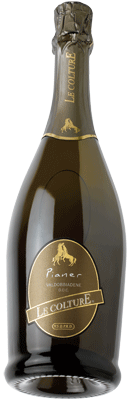
Recently we went to a wine fair for Presecco which recently became a new DOCG (thats the highest class of wine and a big deal for winemakers.) There were at least 40 different producers, which doesnt even represent half of the vineyards out there who make prosecco. When we asked them if they exported to America, many said yes. When we asked where to, what restaurant or wine store, many said that their wine was hard to sell because it was too expensive (most of there wines sold in wine st ores for around $11. We found that to be really surprising especially since Prosecco is a big trend right now in the States. So we decided to check out some places in NY and see what we can find. The result: the same 4 producers and here and there a random other brand. The problem, these same 4 producers are the largest vineyards in Prosecco and Im sorry to say some of the worst. Because their yield is so large, they can afford to sell their wine at a lower price than the others- and this goes for most vineyards not just in Prosecco. Most people will buy the cheaper brand not realizing that for a dollar or two more the quality is that much greater. Trying a variety of bran
 ds is important to realize the difference in taste and quality, and I really think that we as consumers need to get out there and spend the extra dollar if we are going to learn anything about wine. After all, we spend the money on dining out, nice clothes, homes and cars; why cant we do it with wine? A difference between $8 and $11 is not really going to effect out bank accounts that much, but it will make you smile! Some of our pics for great Prosecco are:
Col Vetoraz
Malibràn
Luchetta
Foss Marai
Adami
Le Colture
Casa Bianche/Tenuta Col Sandago
Friday, May 14, 2010
Cardenal Cisneros, Pedro Ximenz

So I know this may sounds weird, but I like layovers. I mean as long as I don't have to wait more than 3 hours in an airport, I enjoy looking around and tasting little things found in that particular country. On our last layover, with 3 hours to loose, we chowed on a few tapas and then passed by the food and wine store to pick up a bottle Pedro Ximenez in the Madrid airport. Cardenal Cisneros produces a wonderfully smooth and rich Pedro Ximenez sherry that tastes almost like your drinking raisins. A dark syrupy brown with long thick legs which left a film on the glass. Hints of brown sugar, mint, dried fig and apricot made this wine light and refreshing. The taste was definitely super sweet but not unbearable. It coated our mouth and warmed out throats, just like a good sherry should. We want something pairable that can balance out the sweetness so a semi-sweet dry desert would be your best bet, like dry sugar cookies or Italian pastries.
So che può sembrare strano, ma non mi dispiace passare il mio tempo negli aeroporti. Almeno che non debba aspettare per piu di tre ore.Può essere una buona opportunità di assaggiare cibi di altre paesi. Per esempio, nel nostro ultimo viaggio avevamo tre ore di 'layover' nell' aeroporto di Madrid. Dopo aver mangiato qualche tapasin un bar, al negozio di vino e cibo abbiamo preso una bottiglia di Pedro Ximenez sherry. L'azienda Cardenal Cismeros ne produce una versione stupendamente liscia e ricca. Pedro Ximenez al palato sembra quasi una spremuta di uvette. Marrone scuro e sciropposo con lunghe lacrime sulle pareti del bicchiere . Sfumature di zucchero di canna, menta, fico secco e albicocca . Il gusto era ovviamente molto dolce ma non stucchevole. Ha ricoperto le nostre bocche e scaldato le nostre gole, come un buon sherry dovrebbe saper fare. Se vogliamo qualcosa da abbinare che possa bilanciare la dolcezza del vino forse un biscotto o altri dolci secchi serebbero le scelte migliori.
Wednesday, April 28, 2010
Vinitaly 2010
My five days of work at Vinitaly have left me with a bit of nostalgia and a small hole in my heart missing the friends I made. I was excited to find out that I would be working in an area which I didn't know much about and with a person who is known not just for his great knowledge of wine but also for his big character. Fabrizio Marzi is not only director of the Travaglino vineyard, but also councilman for the Oltrepò Pavese wine region and co-author for one of the books I had to memorize in order to become a sommelier. Everyone warned me with a laugh that I would have good time with Marzi and learn a lot. That I did. I was placed at the Valle del Riesling stand along with three germans from St. Nikolaus- Hospital, who presented their wines and Christina Doria from Mezzaluna Cantina. The fact that I didnt even know that riesling grew in the Oltrepò or even in Lombardia was enough to make me nervous, but the nineteen different rieslings represented by fourteen different vineyards that I needed to know and memorize was even more scary. Slowly I started my tasting and wrote down key words that would help me remember each brand. My new friends over at Travaglino kept me fed with scrumptious bites of gorganzola from Cremona (grazie Paolo!) smoked salmon, salami of diverse types and of course red or sparkling wine when I'd had enough of the riesling. Gabriele Marchesi, president of the Valle del Riesling, was to my right representing his cantine, Marchesi di Montalto and also checking up on me to make sure I was doing everything correctly. I like to work and I love to learn, so having people like him and Marzi around
 to help give me answers to my questions was of great value. Many people would ask me about the riesling grape and the wine it creates but most of all the difference between Italian and German riesling. Even with the same semi-aromatic grape, the two types of wines are completely different and made, I think, for different types of people. The Italian version, like most Italian wines is made to be served with food. Whereas the German version is sweeter and fresher, obviously since the region it grows in (Mosel), much cooler than that of the Italian region. Both are good in their own respect and in some way I wish would have been presented separately but at the same time having people learn the differences that 'terrior' can make is really quite interesting. By the end of the fair, with sore feet and many mistakes later, I was able to discuss any of the brands easily and offer to any person their preferred taste. Prospects for the future were made and wine was drunk as bottles were given in thanks. I am left smiling knowing that the people I met I will come in contact with again in the future and I will for sure be drinking their wines. Most of all I have learned more that I thought I would and for that I thank all my new friends and colleges in the Oltrepò Pavese. Until next year.
I miei cinque giorni al Vinitaly 2010 son trascorsi con grande intensità e passione, infatti mi mancano già le persone conosciute che adesso posso chiamar amici . Ero felice quando ho saputo che la mia destinazione era una zona che conoscevo poco l'Oltrepo' Pavese e sapere anche di lavorare accanto a Fabrizio Marzi grande conoscitore del mondo del vino, direttore della cantina Travaglino, ma anche consigliere per l'Oltrepò Pavese, nonchè scrittore di alcuni libri basilari che ho dovuto studiare e memorizzare per diventare una sommelier.
Tutti mi hanno avvisato che avrei imparato tanto lavorando con Marzi. Infatti ciò è accaduto. Ero sulla zona della Valle dei Riesling, insieme con tre produttori tedeschi da St. Nikolaus- Hospital, che hanno presentato i loro vini e con Christina Doria della cantina Mezzaluna. Il fatto di conoscer poco il Riesling e poco dell' Oltrepò Pavese mi ha fatto innervosire, dover poi memorizzare i diciannove diversi Rieslings di quattordici diverse aziende vinicole ciò mi incuteva davvero paura. Pian piano ho cominciato a degustare e scrivere le parole chiave che mi aiutavano a ricordare ogni cantina. Mentre i miei nuovi amici di 'Travaglino' mi riempivano di cose gustose come il gorgonzola di Cremona (grazie Paolo!) salmone affumicato, salami e ovviamente vino, rosso o spumante; questo il Riesling aveva superato il mio personale 'livello di guardia'.
Gabriele Marchesi presidente del Valle del Riesling era sulla mia destra, a presentare la sua cantina Marchesi di Montalto e controllava anche se eseguivo bene il mio compito . A me piace molto lavorare e sopratutto imparare perciò avere attorno persone come lui e Marzi pronte a darmi risposte alle mie domande era importantissimo. Tanti clienti mi chiedevano le origini e il gusto del Riesling, ma sopratutto la differenza fra la versione italiana e quella tedesca.
Anche se questa uva semi-aromatica è la medesima per entrambi, il terrior e il microclima fa la differenza creando due tipologie molto diverse di vino. Credo anche che siano da abbinare a persone con caretteri e origini differenti. La versione italiana, come tanti vini italiani è fatta per essere bevuta assieme ad una pietanza, mentre il Riesling tedesco può anch'esso accompagnare un piatto, ma spesso essendo molto più dolce e aromatico è indicato anche ad essere apprezzato da 'solo'. Tutti e due le tipologie sono ottime e devono essere r ispettate per le loro peculiarità. Alla fine dell' expo, con i piedi veramente stanchi e dopo aver fatto un paio di errori iniziali , avevo raggiunto il mio obiettivo cioè conoscere bene le peculiarità dei Riesling presentati ai clienti.
Ho lasciato il Vinitaly con stampato un grande sorriso sulla mia faccia sapendo di aver conosciuto persone molto competenti e avendo la possibilità di rimanere in contatto con loro.
Ho imparato tantissimo da questa esperienza.
Grazie mille amici e colleghi dell'Oltrepo' Pavese. Ci vediamo il prossimo anno!


